

Bat Anatomy
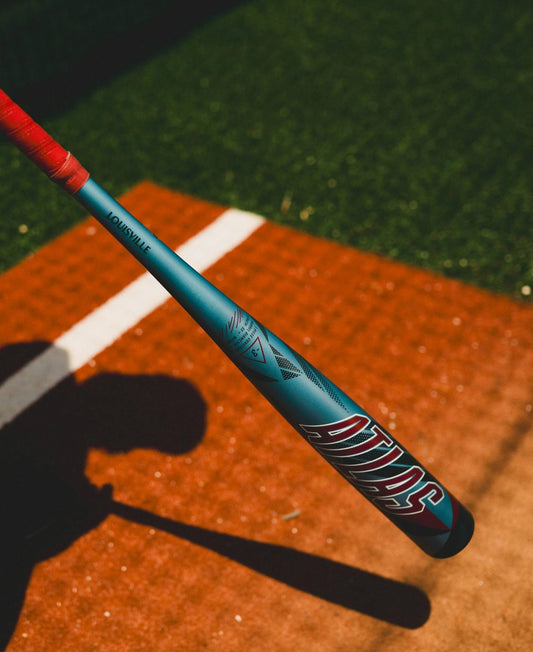
KNOB: Helps keep the bat from slipping out of a batter's hand; Also helpful for hanging on a bat rack for storage
GRIP: Typically covered by tape or a bat gripping aid, this is where a batter will place his or her hands when swinging
TAPER: This section is where the thin handle transitions into the wider barrel
BARREL: The thickest area of the bat where a batter should look to make contact with a baseball or softball
END CAP: Finishes off the barrel; Often helps increase control while limiting the bat's overall swing weight
Drop Weight
- The drop weight is determined by subtracting the weight of the bat from its length. For example, a bat that’s 30 inches long and weighs 20 ounces will have a drop weight of -10.
- The larger the drop weight, the lighter the bat. For example, a bat with a -13 drop weight is lighter than a bat with a -10 drop weight.
- Lighter bats are often best for beginners and smaller, contact-oriented players.
- Heavier bats are better suited for older, advanced athletes and larger, power-hitting players
- Some National Governing Bodies will dictate which drop a player is allowed to swing. For example, High school and college players will need a BBCOR-approved bat (which has a -3 drop weight).
GUTSY'S PRO TIP: To determine if a bat is too heavy, here's one simple trick. Hold the bat handle and extend your arm away from your side. If you can't hold the bat extended for 30-45 seconds, the bat might be too heavy for you.
Bat Material
The life and performance of a bat is largely determined by the quality of its materials. There are three common bat materials found in performance bats.
---
COMPOSITE
Composite bats feature a layered carbon fiber or graphite material in the barrel that yields a powerful pop, minimized vibration (or “sting”) on contact and large sweet spot, but typically will cost more and requires a break-in period before use. Composite often feels lighter and is easier to swing than alloy, especially for younger players. GUTSY'S PRO TIP: For optimal break-in, rotate the bat a quarter turn with each swing, and increase the power level gradually
- Price: $$$
- Break-In: Required; 150-200 hits
- Weather Conditions: Not recommended below 65 degrees
- Vibration: Reduced vibration; clean and smooth feel on contact
- Sound: Crack, like a piece of wood
---
METAL ALLOY
Metal Alloy bats are durable, versatile and offer a balanced feel. They are usable in any weather condition and require no break-in period. But alloy bats may feel a little heavier for younger players, especially those with double wall barrels - and they tend to have a smaller sweet spot and less pop than composite. More advanced players who have learned to make contact with a smaller sweet spot may prefer the balanced feel of alloy that can lead to faster swing speeds. GUTSY'S PRO TIP: Not all alloy blends are created equal! This will lead to a variation in price on all alloy bats
- Price: $
- Break-In: Ready out of the wrapper
- Weather Conditions: Any
- Vibration: Some Vibration and sting felt on mis-hits
- Sound: Ping
---
HYBRID
Hybrid or "Half & Half" bats typically feature a composite handle and metal alloy barrel to give athletes the durability and “hot out of the wrapper” performance of metal with the lighter feel and sting-reducing benefits of composite. GUTSY'S PRO TIP: if you love the feel of an alloy barrel but desire a lower swing weight, look for a hybrid bat with composite end cap!
- Price: $$
- Break-In: Ready out of the wrapper
- Weather Conditions: Any
- Vibration: Some vibration and sting felt on mis-hits, but this can be minimized thanks to the composite handle
- Sound: Ping
Comparisons
ONE-PIECE BATS
Continuous material with no break points between the barrel and handle. By eliminating break points, one-piece bats store more energy upon point of contact, thus increasing power. One-piece bats are typically less expensive as they are easier to produce. They also offer an extra stiff feel and limit flex on impact
VS.
TWO PIECE BATS
Constructed with a special bonding process between the barrel and handle, two-piece bats, generally, offer a greater amount of flex when connecting with the ball, producing a “whip” effect that boosts bat speed. Two-piece bats are typically more expensive, but can also help limit sting and vibration on mis-hits
---
BALANCED BATS
Weight is evenly distributed throughout the entire length of the barrel for a faster swing speed. Balanced bats are more common and can be easier for most players to swing
VS.
END-LOADED BATS
End-loaded bats have added weight towards the end of the barrel, helping power hitters achieve more momentum and distance with every swing
Baseball Leagues and Certifications
BBCOR
- Ages: 14+ (High School/College)
- Drop Weight Must be -3
- Bat Length: 29"-34"
- Barrel Diameters: 2-5/8"
- Stamp: BBCOR
All high school and college athletes must use a bat that has a -3 drop weight and a barrel diameter that does not exceed 2-5/8". All bats will be stamped with a BBCOR.50 certification, which measures and regulates the "trampoline effect' of a bat to ensure more wood-like performance.
---
USSSA
- Ages: 8-14
- Drop Weights: -5, -8 and -10
- Bat Lengths: "25”-33”
- Barrel Diameters: 2-5/8", 2-3/4"
- Stamp: USSSA
USSSA travel ball leagues allow barrels with a diameter larger than 2-1/4" and will provide the highest allowed performance for younger players. Athletes near high school age should move closer to a -5 drop weight to prepare them for BBCOR’s -3 drop weight requirement
---
USA
- Ages: 7 -14
- Drop Weights: -5 through -13.5
- Bat Lengths: 24" through 32"
- Barrel Diameters: 2-1/4", 2-5/8"
- Stamp: USA
USA Bats are approved for the following youth leagues: AABC, Babe Ruth/Cal Ripken, Dixie, Little League, PONY and NABF. USA Bats will yield a lower performance than USSSA bats, giving an output closer to wood to provide a more level playing field across youth participants.
---
JR. BIG BARREL
- Ages: 6-8 (Coach Pitch)
- Drop Weights: -10 through -14
- Bat Lengths: 25" through 28"
- Barrel Diameters: 2-5/8", 2-3/4"
- Stamp: USSSA
Made specifically for athletes in coach pitch or machine pitch leagues and designed for hitting baseballs thrown at 45 mph or less.
---
T-BALL
- Ages: 7 & Under (Beginner)
- Drop Weights: -10 through -14
- Bat Lengths: 24", 25", 26"
- Barrel Diameters: 2-1/4", 2-5/8"
- Stamp: USA
T-Ball bats are designed for first-time athletes learning the fundamentals of hitting off a batting tee. Little League T-Ball Bats will feature the USA stamp and cannot exceed 26"
Determining Your Ideal Bat Length
Using the right length of bat is critical to achieving proper swing mechanics and results at the plate. Too long, and you can risk compromising bat speed or accuracy. Too short, and you can limit your plate coverage, giving up a portion of your strike zone. Here's a few Pro tips on how to measure for proper length.
1. Place the bottom of the bat in the center of your chest, pointing it to the side, parallel to your outstretched arm. If you can comfortably reach the top of the bat with your fingertips, the bat is the right length.
2. Position the bottom of the bat in the center of your chest, facing outward. If your arm can reach out and grab the barrel of the bat, then it is the correct length.3. Stand the bat up against the side of your leg. If the end of the bat reaches the center of your palm when you reach down, it’s the appropriate length.
Featured collection
-
Louisville Slugger Supra™ 2026 USSSA -5 Bat
Vendor:Gutsy AthleticRegular price $224.99 USDRegular priceUnit price per -
Louisville Slugger Supra™ 2026 USSSA -8 Bat
Vendor:Gutsy AthleticRegular price $224.99 USDRegular priceUnit price per -
Louisville Slugger Supra™ 2026 USSSA -10 Bat
Vendor:Gutsy AthleticRegular price $224.99 USDRegular priceUnit price per -
Louisville Slugger 2026 Atlas BBCOR Bat
Vendor:Gutsy AthleticRegular price $262.46 USDRegular priceUnit price per